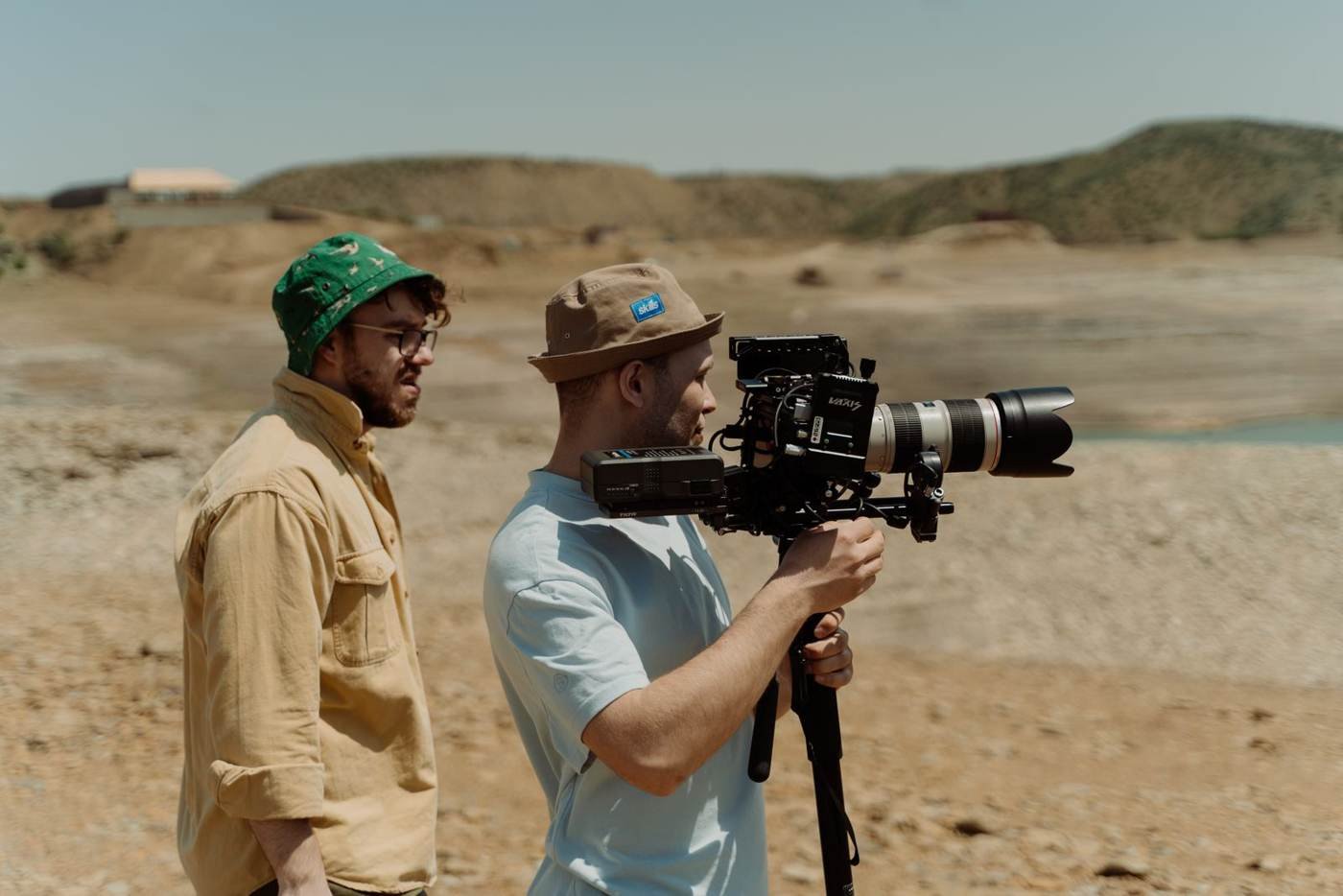
The best season
From October to April the temperatures are pleasant during the day, which is ideal for long shooting days. In summer it is very hot at midday: plan to shoot early in the morning and at the end of the afternoon. Spring can bring wind and sand storms.
The best light
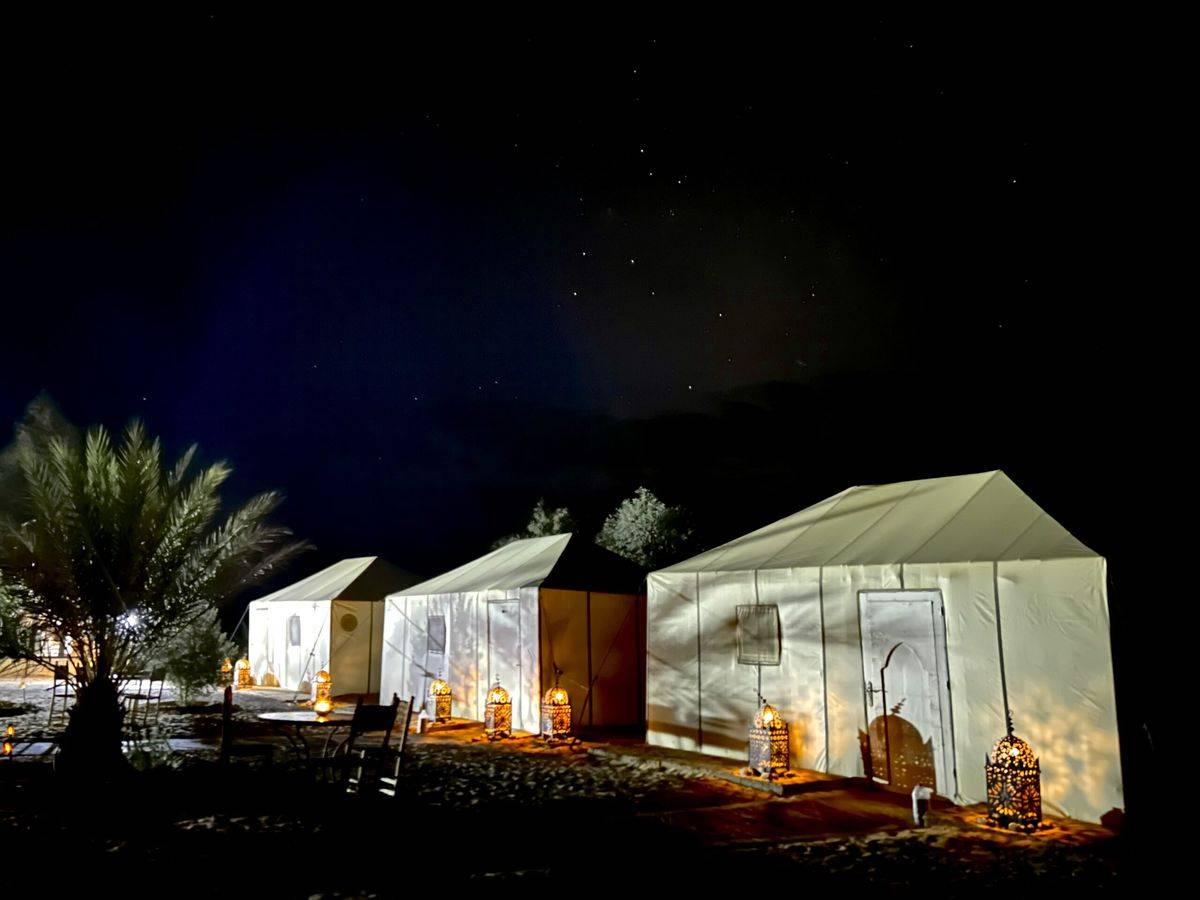
The golden hour is spectacular in Erg Chebbi: the dunes turn orange and red just after sunrise and before sunset, with long shadows on the ridges. At night the sky is very dark, perfect for star shots.
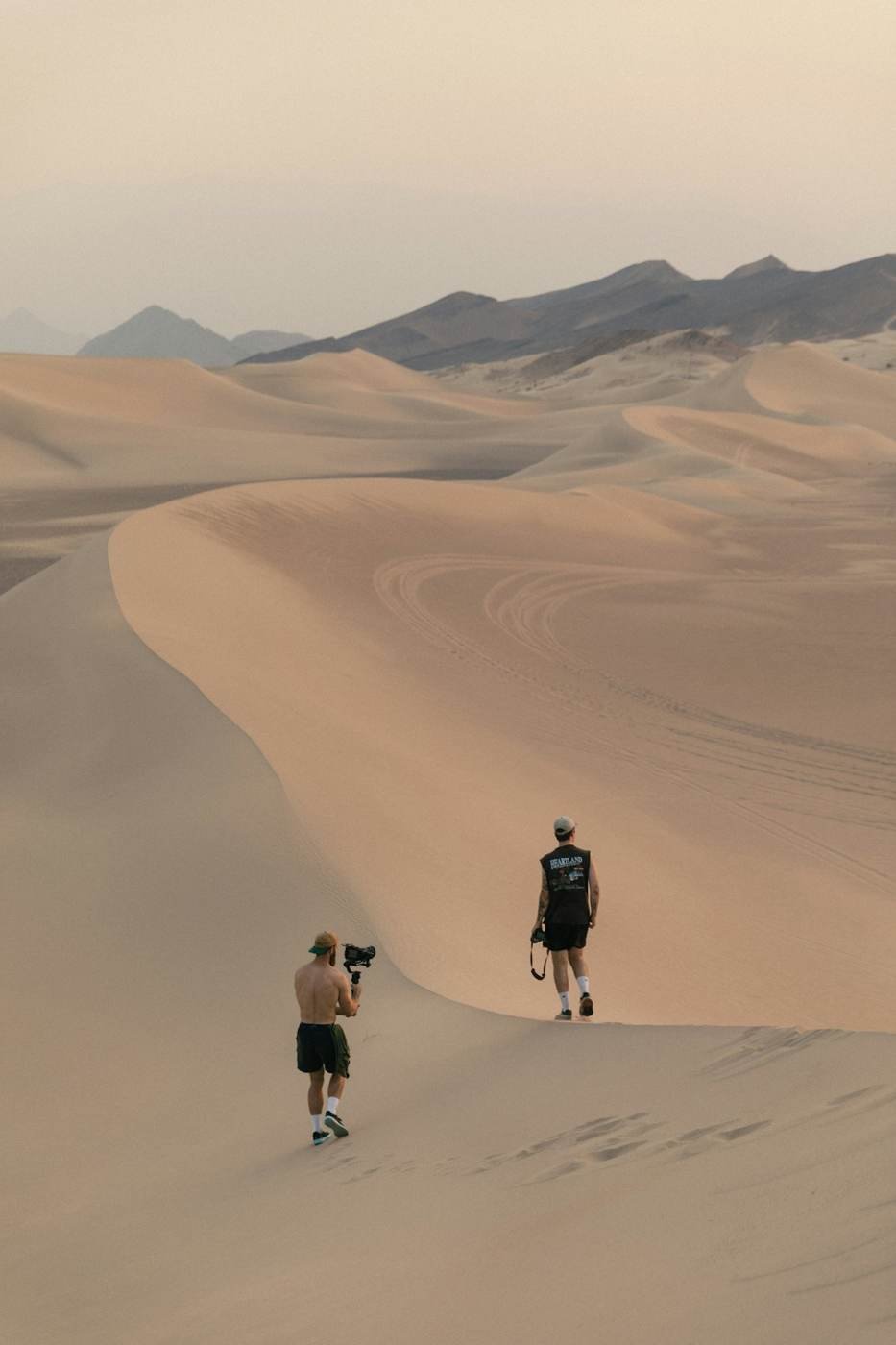
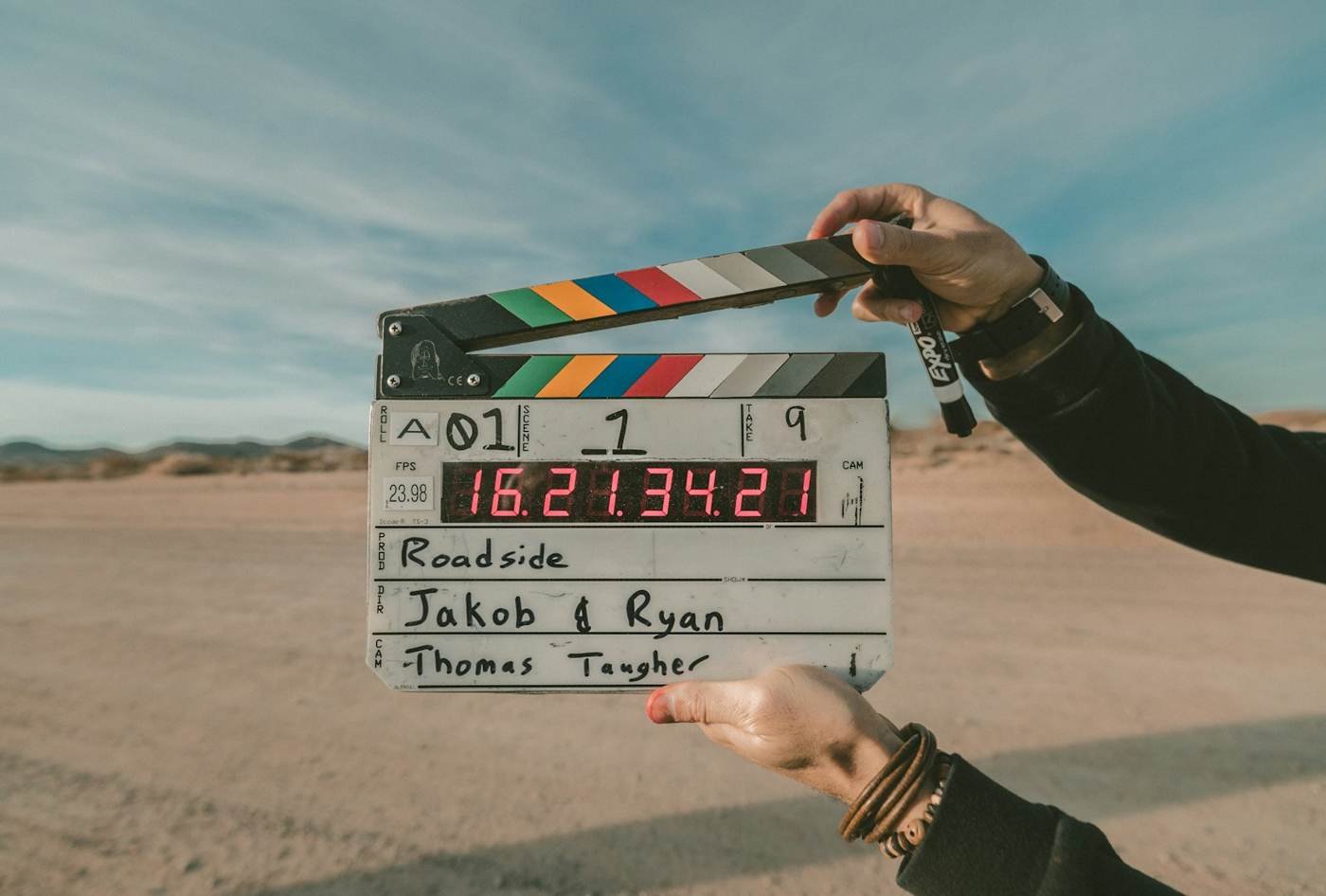
Photo: Jakob Owens / Unsplash
Permits and drones
A shooting permit from the Moroccan Cinema Centre (CCM) is needed for productions in Morocco. Drones need a separate authorisation and the import of the drone must be declared: start the process several weeks before the shoot, with a local fixer.
Protect your equipment
- Use rain covers or bags against the sand and change lenses inside the vehicle or a tent
- Bring blowers, cleaning kits and spare filters
- Keep batteries and drives in the shade
- Driving and walking on soft sand take time: plan extra time to move between locations
Logistics in the dunes
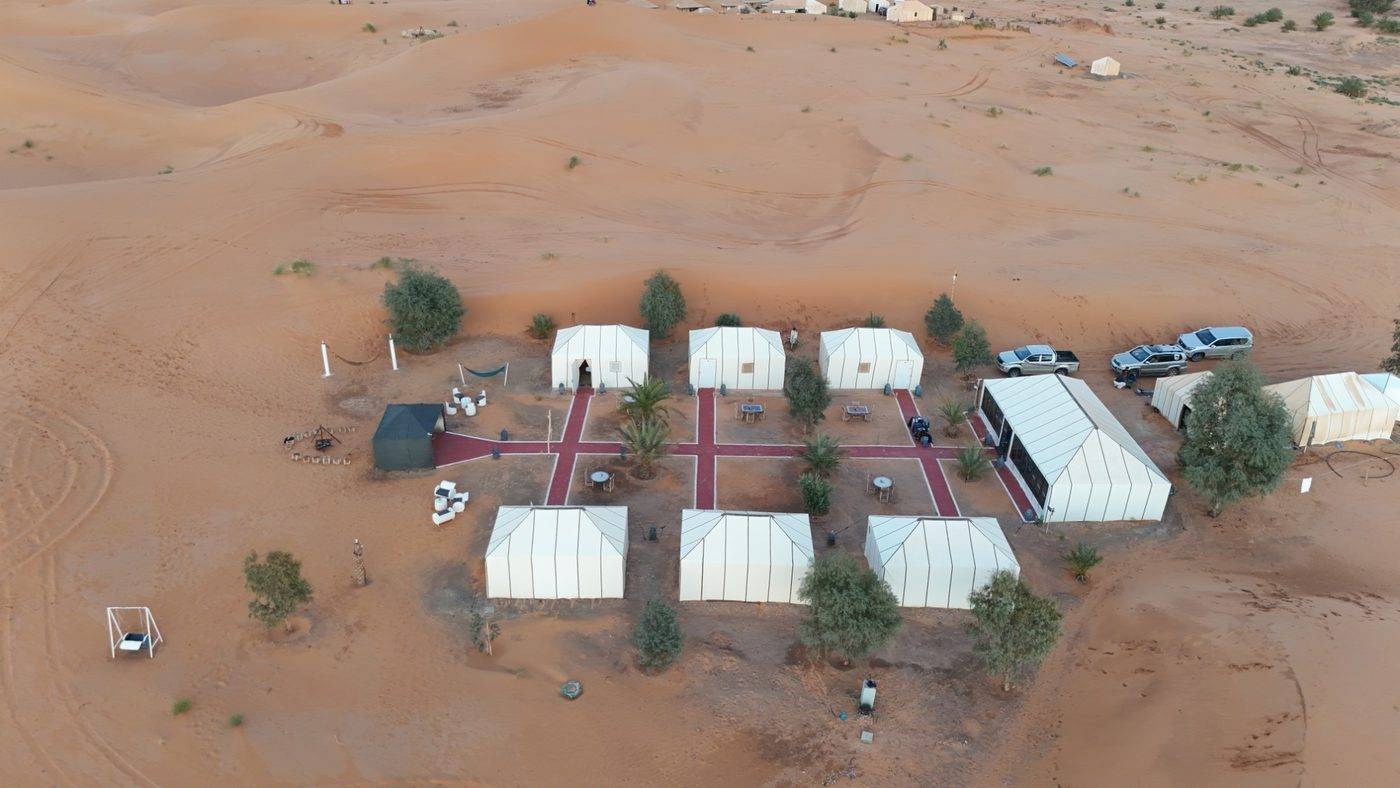
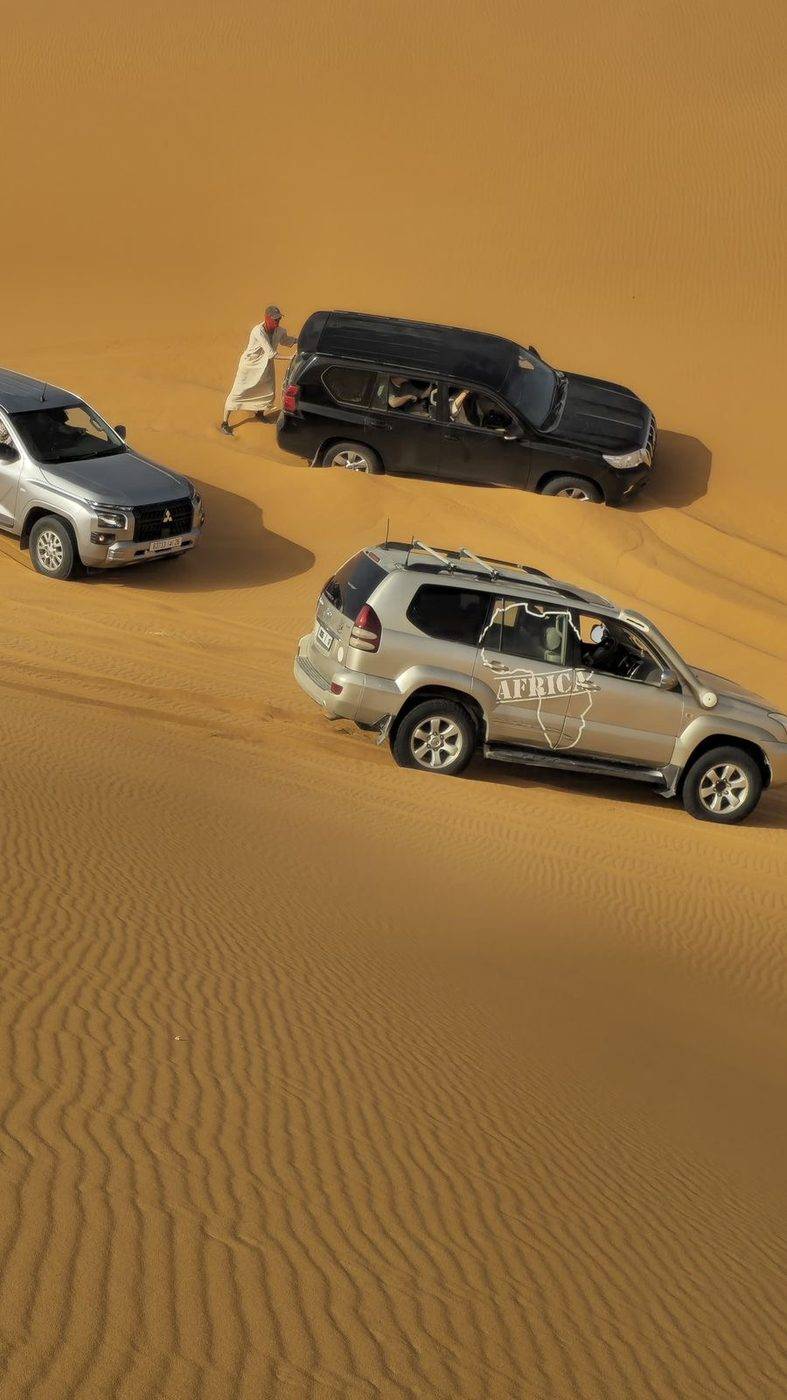
Only 4x4 vehicles, camels and quads can go deep into the dunes. Plan where you will put your base: our camp is at the edge of Erg Chebbi, so the crew can sleep, eat and charge equipment a few minutes from the locations.
Respect the place
Erg Chebbi is home to nomad families and small villages. Ask before filming people, leave no waste in the dunes and drive only on the tracks indicated by local drivers.
Frequently asked questions
Do I need a permit to film in the Merzouga desert?
Professional productions need a shooting permit from the Moroccan Cinema Centre (CCM). Drones need a separate authorisation.
What is the best time of year to film in the Sahara?
October to April, with pleasant days. In summer, shoot at sunrise and sunset and rest at midday.
Can the crew stay at the camp?
Yes, our private tents with bathroom can host actors and crew, with all meals included.